
Osiyo,
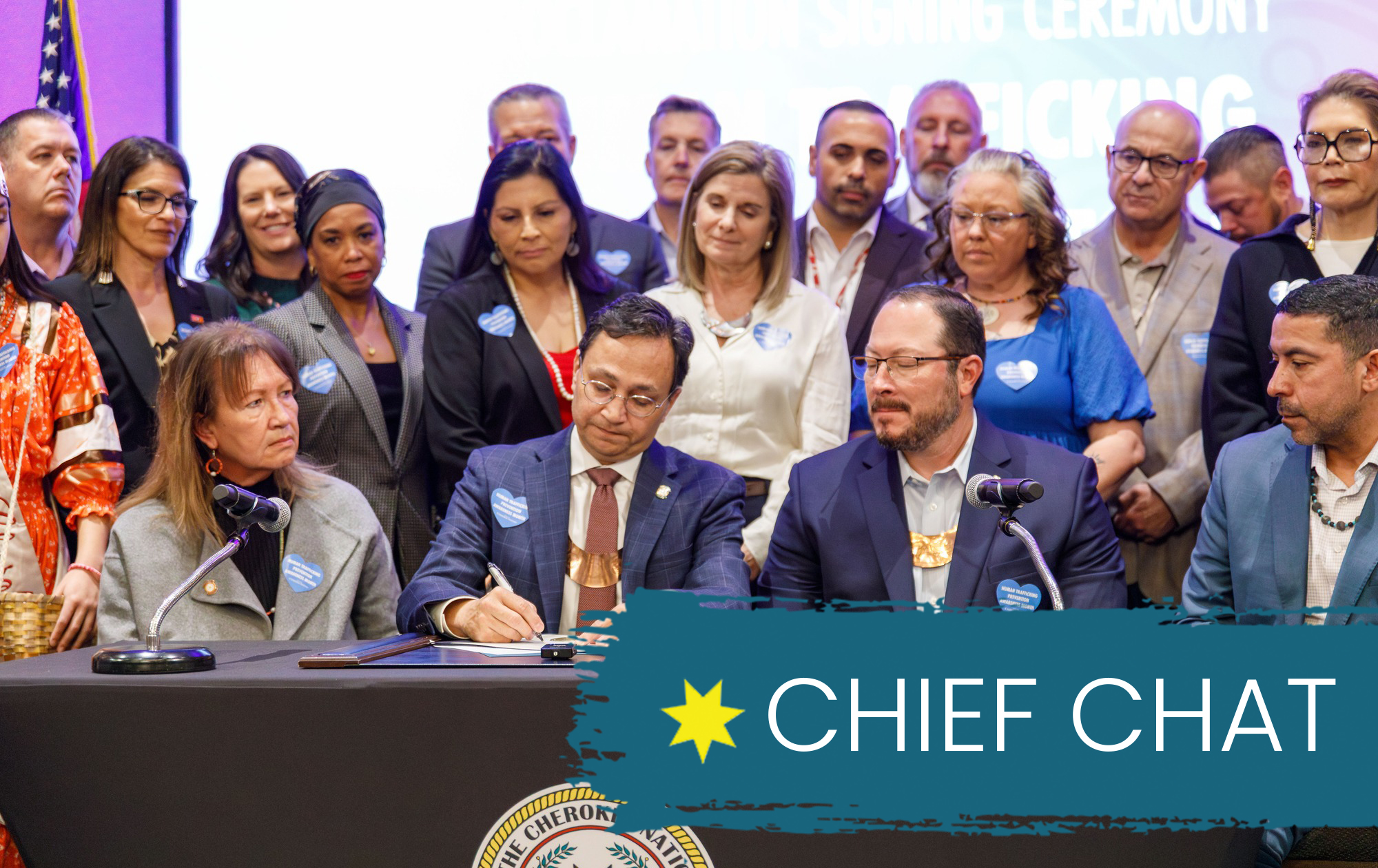
Human trafficking is not a distant crime. It is a harsh reality impacting tribal communities, including Cherokee Nation citizens and families, both on our Reservation and across the country. That is why leaders from my administration and the Council of the Cherokee Nation, along with employees from Cherokee Nation and Cherokee Nation Businesses, gathered recently to proclaim January as Human Trafficking Prevention Awareness Month.
This is not merely a symbolic gesture — it is a public vow to protect the safety, dignity and human rights of every person within our lands.
For Native communities, this issue carries a deeper weight. Human trafficking is intertwined with the broader crisis of violence against Native people, especially Native women. These harms are part of a pattern rooted in exploitation, vulnerability, and systemic failures. As Cherokee people, we believe every life is sacred. That belief carries a profound responsibility to see the danger, to speak about it openly and to act with purpose.
This commitment is personal to my administration. For years, Cherokee Nation First Lady January Hoskin has been a steadfast advocate for the protection of our most vulnerable people, championing causes that ensure the safety of women and children, including our highly respected ONE FIRE Victim Services.
However, awareness alone is not enough — action is required. Our tribe is backing our words with resources and intervention. We are allocating funds to expand victim services and are strengthening the Cherokee Nation Marshal Service, as well as the Cherokee Nation Justice System. We are ensuring we have the judges, prosecutors, officers, and support staff necessary to effectively and efficiently handle trafficking cases within the reservation.
We are also looking inward to ensure our own workforce is part of this defense strategy. Inspired by a righteous Cherokee Nation employee, Therresa Hammonds, who recognized the global scale of this issue, we are implementing new training programs across our government. This includes specialized training for our health care providers and other employees to recognize the warning signs of trafficking and respond appropriately.
Education is absolutely central to this work. Trafficking does not look the same in every case, and there is no single profile of a victim. That is why training, community engagement and open conversations matter.
Human trafficking thrives in the shadows. By bringing it into the light, we live out our Cherokee values, and we protect our most vulnerable. We are a government that stands up for one another and refuses to look away. Together, we can build a strong wall of protection around our Cherokee communities and families.
Wado,
Chuck Hoskin Jr.
Principal Chief