
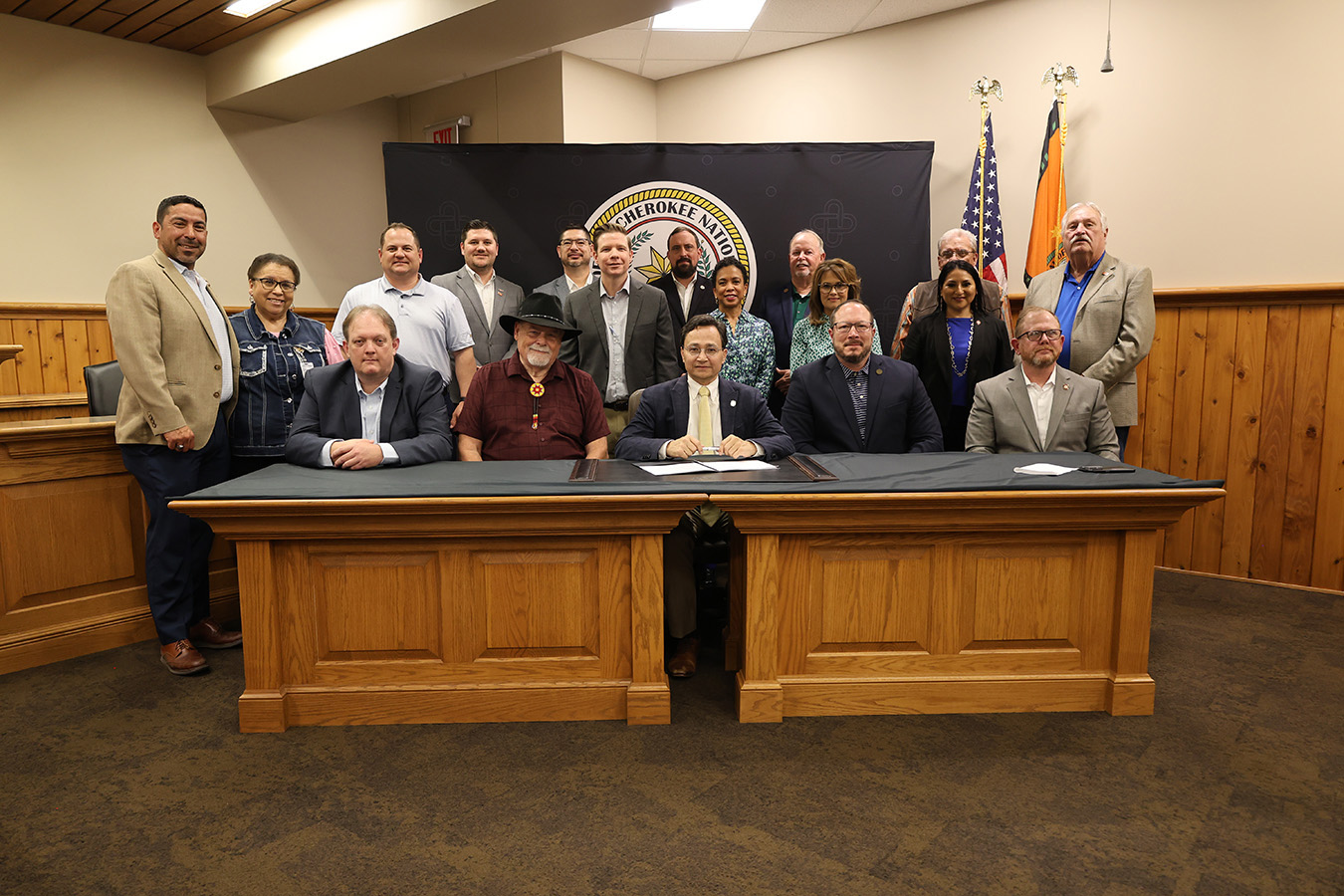
TAHLEQUAH, Okla. —Cherokee Nation Principal Chief Chuck Hoskin Jr. and Deputy Chief Bryan Warner on Tuesday added an amendment to the tribe’s Public Health and Wellness Fund Act that sets aside $6.5 million in new opioid settlement funds for the nation’s reentry program, using $4 million to build and operate transitional living housing for formerly incarcerated Cherokee citizens.
“This new project should be the model of addressing the consequences of what the opioid industry has done to this reservation,” said Chief Hoskin. “We are lucky to have an attorney general’s office that continues to be aggressive in getting settlement dollars to help benefit the Cherokee people, and this latest settlement is going to expand our reentry program that helps people reenter the lives they were meant to have.”
Chief Hoskin explained that although substance use disorder and criminal conduct are distinct issues, there is significant overlap that warrants some investment of opioid settlement funds.
In 2017, Cherokee Nation became the first tribe in the country to sue the opioid industry for damages resulting from alleged irresponsible distribution of the drug across the Cherokee Nation Reservation.
Chief Hoskin, former Attorney General Sara Hill and current Cherokee Nation AG Chad Harsha, have continued these legal efforts, reaching the latest settlement from the General 10. The amendment that the Hoskin-Warner Administration signed into the Public Health and Wellness Fund Act will set aside some of the funds to build transitional housing for the tribe’s “Coming Home Reentry Program.”
Half of the $4 million will go to the construction of new transitional housing facilities, and the other half will go to operating the facilities once completed. Location for the facilities, as well as timeframes for construction will be determined as part of a sustainability analysis.
The Cherokee Nation’s reentry program served 500 Cherokee citizens in fiscal year 2025.
“Our Cherokee culture teaches us that everyone has value, so those who want a path back to society deserve that path. Expanding the reentry program is one way we can provide that support for these individuals and their families,” said Deputy Chief Bryan Warner.
Cherokee Nation Councilor Daryl Legg, who helped launch the program in late 2013 as a tribal employee, said the numbers served will increase year over year with the new funding and plan for transitional housing.
“First and foremost, our number one concern is public safety. If we can help individuals succeed and not reoffend, then we have done our job. I am grateful to Chief Hoskin, Deputy Chief Warner, and the Council of the Cherokee Nation for their endless support in this program. We are going to be able to impact many lives,” said Councilman Legg.