
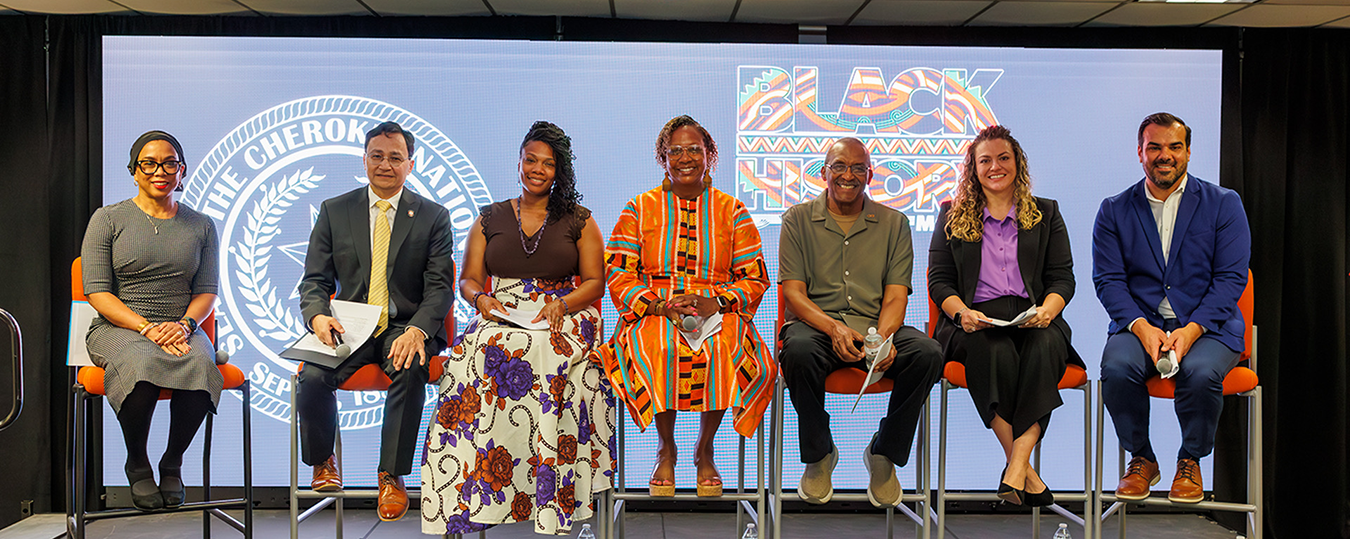
TULSA, Okla. – Cherokee Nation Principal Chief Chuck Hoskin Jr., Deputy Chief Bryan Warner, tribal leaders and the community gathered at OSU Tulsa on Monday to celebrate Black History Month with an examination of the tribe’s past and a preview of its future.
Last June, as part of the tribe’s annual Juneteenth celebration, Chief Hoskin assembled a “Task Force to Examine the Impact of Slavery on Cherokee Nation’s 19th Century Economy and Infrastructure.” The task force released its report during the event.
“At Cherokee Nation we believe in embracing our past, including the dark chapters, rather than running away from them or whitewashing them,” said Chief Hoskin. “Deputy Chief Warner and I are committed to not simply meeting the legal requirement of equality for Freedmen descendants, but of examining Cherokee Nation’s history of slavery, emancipation, the struggle for basic civil rights by Freedmen and their descendants and full inclusion of Freedmen descendants into Cherokee society today. Cherokee Nation has become stronger, not weaker, by embracing equality and exploring all of our history, no matter how difficult.”
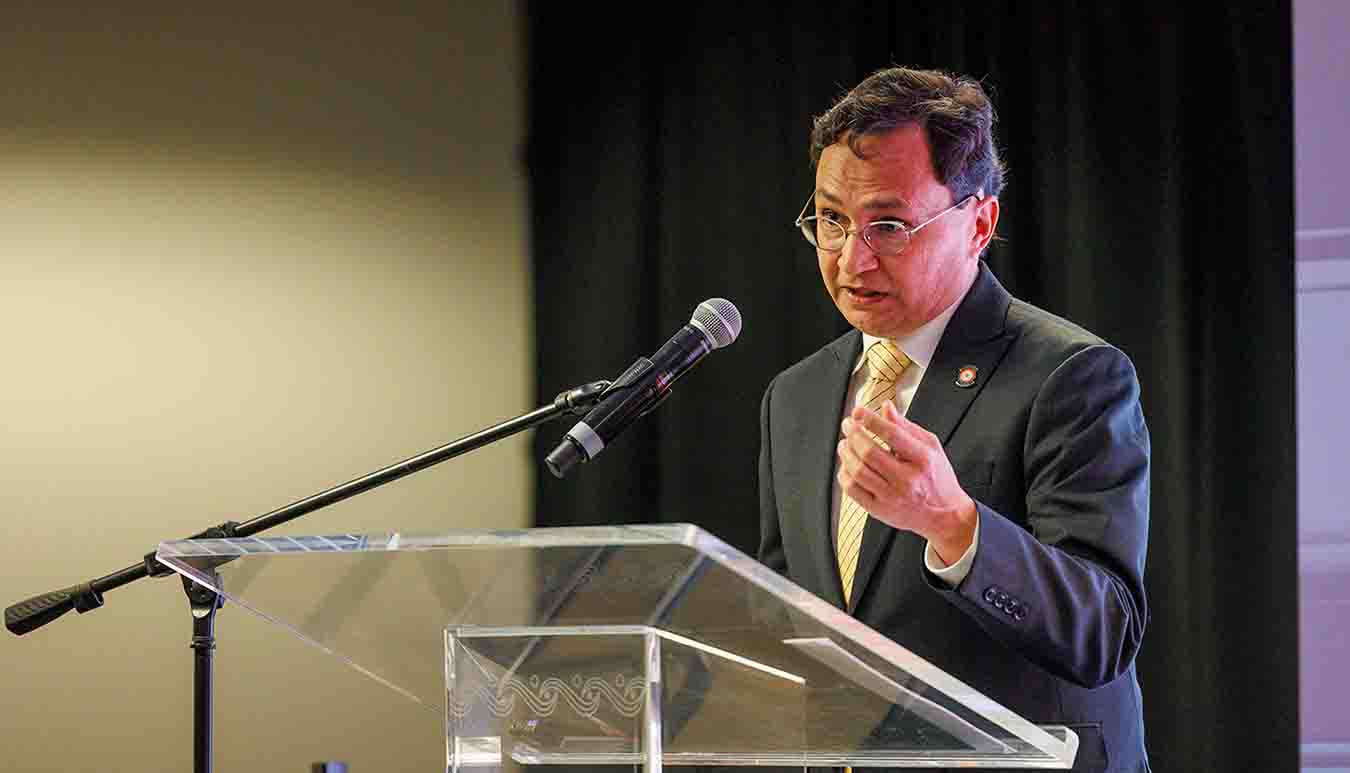
At Monday’s event, task force chair Melissa Payne, a Cherokee Nation citizen of Freedmen descent who led the six-member task force, provided a summary of the task force report.
“I’m grateful to have the opportunity to gather with all of our Cherokee family,” said Freedmen Community Liaison Melissa Payne. “We must continue gathering the stories that are told in our communities and include them in the history of our tribe.”
The task force report made key historical findings, including:
- The enslaver, or planter, class comprised about 6.74% of households in Cherokee Nation pre-removal and was made up largely of mixed-blood families with ties to white ancestors.
- Prominent Cherokees were among enslavers in the tribe, including 11 of the 12 signers of the tribe’s 1827 Cherokee Constitution.
- Black chattel enslavement served as a primary engine for the Cherokee Nation’s economic transition and infrastructure growth in the 19th century.
- By 1835 Cherokees owned nearly 1,600 enslaved people.
- Enslaved people operated plantations, built infrastructure and public buildings and were exploited for industries such as grist mills throughout the 19th century.
- After the tribe’s 1838-1839 forced removal to what is now northeastern Oklahoma, enslaved people “were pivotal to the rebuilding of the Cherokee Nation.”
Enslavement officially ended in the Cherokee Nation with a proclamation in 1863. In an 1866 treaty between Cherokee Nation and the United States, former enslaved people and their descendants were promised “all the rights of native Cherokees.”
The task force recommended more study of the subjects examined in the report. The task force also advised that the tribe should expand depictions and interpretations of the tribe’s history with enslavement and the experiences of enslaved people, Freedmen and Freedmen descendants in its historic sites and museums.
Deputy Chief Warner praised the task force and encouraged further study on the subject of enslavement and the role of Freedmen and Freedmen descendants in Cherokee cultural, civic, community and religious life.
“Just as it is important for Americans to understand the full history of America, Cherokee Nation must always be willing to examine its own history,” said Deputy Chief Warner. “While enslavement may be a stain, we can work to cleanse it because equality is righteous and knowledge is power.”
Chief Hoskin and Deputy Chief Warner made several announcements at the event, including:
- The publication of the report from the “Task Force to Examine the Impact of Enslavement on Cherokee Nation’s 19th Century Economy and Infrastructure” on the tribe’s website, Cherokee.org
- The completion this year of the Cherokee Nation North Tulsa Community Building, a $2.2 million facility located at 1205 E. 46th Street North.
- An elder nutrition program is coming to the new North Tulsa Community Building, to begin this summer, part of the Hoskin / Warner’s expansion of the program under the tribe’s Public Health and Wellness Fund Act.
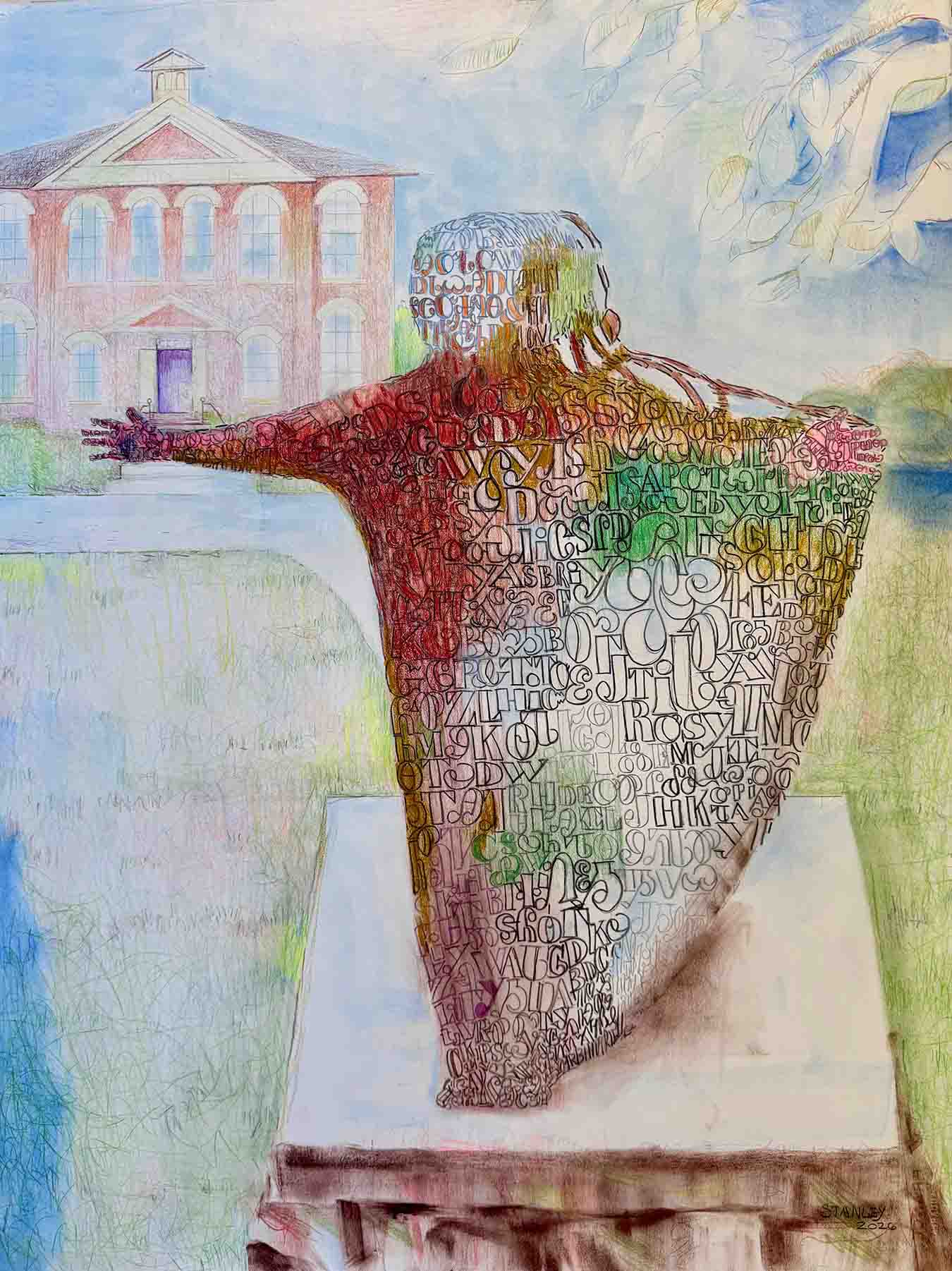
- The selection of artist Stanley Boydston’s design for a Freedmen monument to be placed at the Cherokee National History Museum capitol square in Tahlequah.
- A career, contractor and small business fair will be held at the new community building on March 12.
- A Cherokee language course will be held at the new community building in May.
- A special reception open to the public on February 21 at 10 a.m. at the tribe’s Anna Mitchell Cultural Center in Vinita to celebrate the tribe’s exhibit “We Are Cherokee: Cherokee Freedmen and the Right to Citizenship.”
During the event attendees also saw a sneak preview of a forthcoming documentary on Cherokee Freedmen, still in production by the tribe’s film and television division, Cherokee Film.
“The Hoskin/Warner Administration takes equality, healing and reconciliation seriously,” said Cherokee Nation Secretary of State Shella Bowlin. “For Cherokee Nation these are not just concepts, they are efforts and investments that put those concepts into action.”
Secretay Bowlin, along with Environmental Protection Commissioner Marilyn Vann, is one of two Cherokee Nation citizens of Freedmen descent who Chief Hoskin has appointed to a Cherokee council-confirmed position.
The tribe will celebrate the grand opening of its North Tulsa Community Building on February 19. The facility will be the home of the North Tulsa Cherokee Community Organization.
Cherokee Nation Council member Ashley Grant, who represents north Tulsa and spoke at the event on behalf of the Council, praised the investment in her district.
“We have a great community of Cherokee Nation citizens in north Tulsa and we are stepping up to invest in the grass roots,” said Grant.
Boydston’s Cherokee Freedmen monument, selected by the Cherokee Nation Advisory Committee on History, Art and Culture, will be completed and placed at the tribe’s historic courthouse square in Tahlequah in 2027.
Cherokee Nation leaders encouraged all Cherokee Nation citizens to read the task force report.
“The days of denying Cherokee Freedmen descendants equality guaranteed by treaty or making them beg for their rights at the ballot box may long be over,” said Chief Hoskin. “I feel that our shared journey to understand our history of enslavement, emancipation and the Freedmen experience is only just beginning.”
During the event Chief Hoskin said that he would sign an executive order at the Freedmen exhibit reception on February 21 to direct further review and remedial action of all Cherokee Nation museums and historic sites to ensure that the Freedmen experience is included.
“The task force report makes clear that we have more work to do inside our own operations to ensure the story of Cherokee Freedmen is told,” said Chief Hoskin. “There is not a moment to spare to get to work.”
Monday’s Cherokee Nation Black History Month event was co-hosted by NTCCO and the Descendants of Freedmen of the Five Tribes Association.
For more information on Cherokee Nation’s history, emancipation and the Cherokee Freedmen’s efforts to gain equality, visit VisitCherokeeNation.com